Cardiac care at the
frontier of medicine
From preventive screening to complex intervention — a full spectrum of cardiovascular services, delivered with precision and compassion.
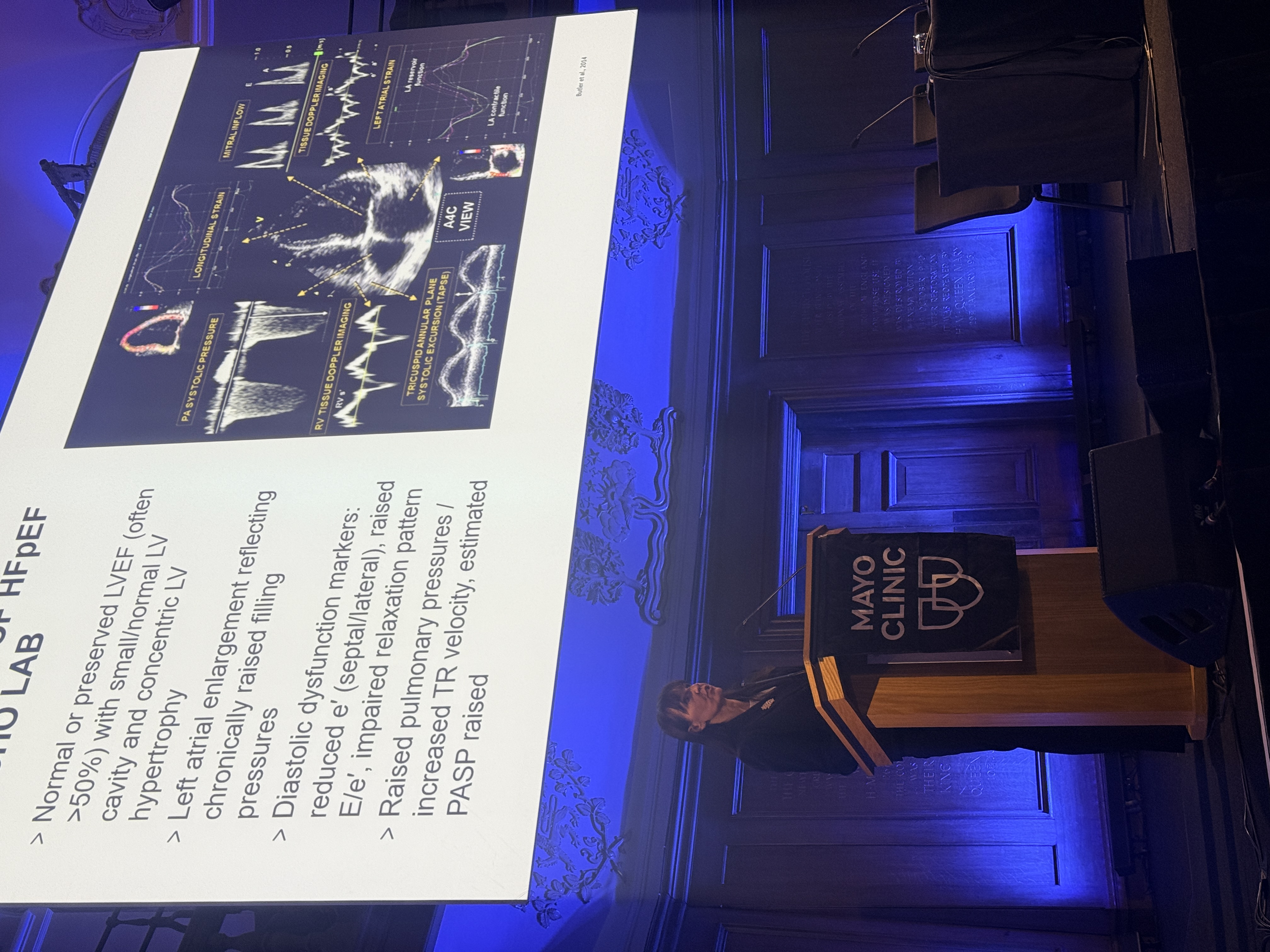
Women's Heart Health
Heart disease is the leading cause of death in women, yet women's symptoms are frequently different, subtler, and more often dismissed. Dr Wamil offers dedicated cardiovascular care for women — addressing hormone-related risk, pregnancy complications, menopause, and conditions such as SCAD, microvascular dysfunction and Takotsubo cardiomyopathy that disproportionately affect women.
Hormonal & Menopause Care
Risk assessment and tailored prevention across the hormonal transitions that shape women's cardiovascular health — from pregnancy and PCOS through to the menopause.
Pregnancy-Related Cardiology
Specialist evaluation of pre-eclampsia, gestational hypertension and other pregnancy complications that raise long-term cardiac risk.
SCAD & Microvascular Disease
Diagnosis and management of spontaneous coronary artery dissection and coronary microvascular dysfunction — conditions that disproportionately affect women.
Atypical Symptom Evaluation
Thorough assessment of the subtler, often-dismissed symptoms women present with, ensuring timely diagnosis and personalised treatment.
Women's Heart Health: Cardiometabolic Disease and the Risk of Cardiac Events
How cardiometabolic conditions — hypertension, diabetes, abnormal lipids, and obesity — interact across women's life stages to drive cardiac risk, and a practical prevention framework.
Care that's shaped around you
We understand that navigating a heart condition can feel overwhelming. Our team is here to support you at every stage — from your first consultation through to long-term follow-up — so you always know what comes next and why.
Choosing where to receive care matters. Our clinicians stay at the forefront of cardiology innovation, incorporating new techniques and scientific advances into everyday practice. You'll have access to the same high-quality standards used across Mayo Clinic centres worldwide.
Your cardiologist reviews your test results together with a team of experts to build a treatment plan individualised to your exact condition and circumstances — then refines it as your care progresses.
Support at every step
From your first consultation to ongoing follow-up, our London-based team is by your side throughout — so you never feel you're navigating a heart condition alone.
Guideline-writing expertise
Our cardiologists don't just follow international treatment guidelines — they help write them. You receive care informed by the people shaping the future of cardiology.
A world-class network
Mayo Clinic Healthcare is one of the largest and most comprehensive heart practices in the world. Your care team collaborates with colleagues at Mayo Clinic in the United States, combining knowledge across continents to treat both common and rare conditions.
A plan built around you
Treatment is tailored to your diagnosis, lifestyle and preferences. Depending on your needs, that may include medication, lifestyle guidance, minimally invasive procedures, or referral for advanced interventions — always chosen with you, not for you.
Where helpful, your case is discussed in a multidisciplinary meeting — bringing together imaging specialists, interventional cardiologists and cardiac surgeons — so every recommendation reflects the combined judgment of an entire expert team, not just one opinion. Talk to us about a personalised assessment.
Do I always need to be
followed up by a cardiologist?
Not necessarily. Follow-up is tailored to your diagnosis, your risk and how stable your condition is. Some people benefit from regular specialist review for years; others need only a single assessment and can safely return to their GP's care.
The right answer depends on what we find — and it can change over time. Here's how we think about who needs ongoing follow-up and who doesn't.
Ongoing specialist review
If you've had a heart attack, stent, bypass, heart failure or certain arrhythmias, regular cardiology follow-up is part of your treatment — keeping medication optimised, detecting changes early and adjusting your plan as your condition evolves.
A single, focused assessment
Not every concern needs long-term specialist care. A one-off consultation — for a second opinion, a risk assessment or to rule out a problem — may be all you need, with your GP continuing day-to-day management.
Shared care with your GP
For stable conditions such as well-controlled hypertension or mild cholesterol issues, your GP can often manage ongoing care with periodic specialist check-ins, so you're not attending hospital appointments unnecessarily.
Between appointments
You're never left on your own. If new symptoms or concerns arise between scheduled visits, contact the team directly — we'll advise whether to be seen sooner, adjust treatment, or reassure you that all is well.
Women's heart health
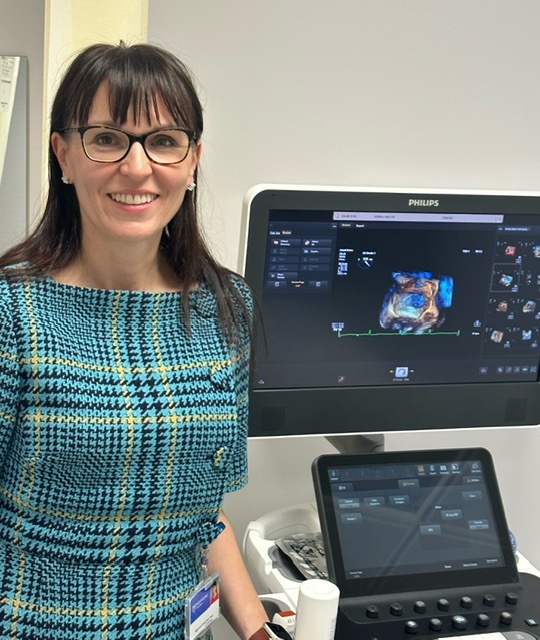
Advanced echocardiography
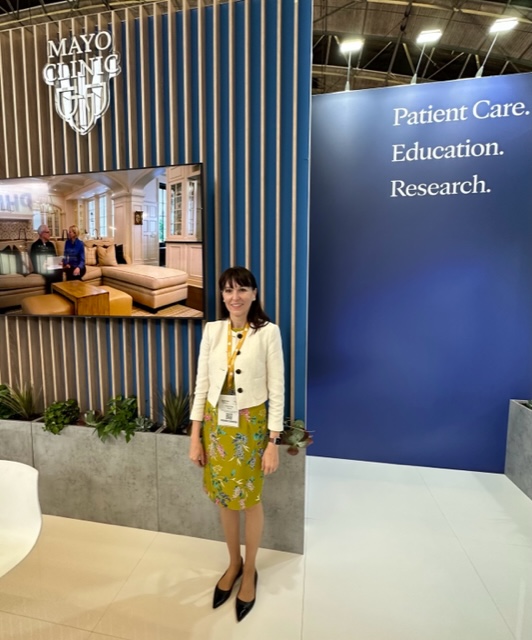
Mayo Clinic — research & education
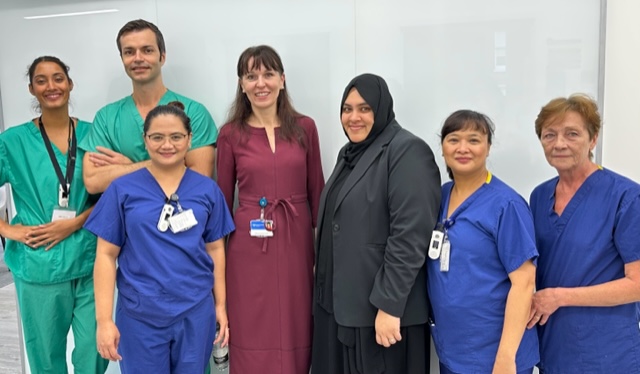
The cardiac care team
Advanced non-invasive
cardiac imaging.
Dr Wamil is one of a very few cardiology consultants in the UK with expertise across all three cardiac imaging modalities — echocardiography, cardiac CT, and cardiac MRI — enabling a truly personalised, multimodality approach to diagnosis and treatment.
Echocardiography
Ultrasound imaging of heart chambers, valves and function
Echocardiography uses ultrasound to assess the size and function of the heart's chambers and to detect structural abnormalities — particularly in how the valves work. Depending on the clinical question, several types of echo may be required.
Transoesophageal echo (TOE)
When a detailed view of the valves is needed to guide surgical treatment, TOE acquires high-resolution images and 3D reconstructions that reveal the precise mechanism of disease — essential for planning valve repair or replacement.
Bubble & contrast echo
Contrast and bubble studies enhance image clarity and reveal shunts or subtle structural defects that standard echo can miss.
Stress echo
Using exercise or pharmacological stress to assess how oxygen supply reaches different regions of the heart muscle — key for evaluating coronary artery disease.
Sub-speciality training at Oxford University Hospitals with accreditations from the British Society of Echocardiography and the European Association of Cardiovascular Imaging. Co-author of a leading TOE handbook chapter.
Cardiac CT Coronary Angiography
Non-invasive, low-radiation imaging of the coronary arteries
Cardiac CT coronary angiography (CTCA) uses low radiation to assess the coronary arteries that supply blood and oxygen to the heart muscle — entirely non-invasively. It is also used to plan structural heart procedures such as TAVI and MitraClip, and to assess grafts after bypass surgery (CABG).
Coronary artery assessment
Detailed visualisation of the coronary arteries to detect narrowing or plaque without the need for an invasive catheter.
Structural procedure planning
Precise anatomical mapping used to plan TAVI (aortic valve replacement) and MitraClip (mitral regurgitation treatment).
Post-surgical graft assessment
Evaluates bypass grafts after CABG to confirm patency and guide ongoing care.
Dr Wamil's training in CTCA has been certified by the Society of Cardiac Computed Tomography.
Cardiac Magnetic Resonance (CMR)
Exceptionally detailed imaging of heart structure and tissue
CMR allows cardiologists to view exceptionally detailed images of the heart's structure and blood vessels. It shows how the heart is functioning and helps Dr Wamil understand the heart disease causing your symptoms.
Function & scarring
Various scanning protocols evaluate cardiac function, heart muscle scarring, and problems with poor blood supply.
T1 & T2 mapping
Novel CMR techniques such as T1 and T2 mapping allow Dr Wamil to assess causes of heart failure and rare cardiomyopathies.
Valve problem assessment
CMR can evaluate certain types of valve problems to complement echocardiography.
Level 3 accreditations in CMR from the European Association of Cardiovascular Imaging and the Society of Cardiac Magnetic Resonance.
How multimodality imaging helps patients
A key concept in multimodality imaging is a personalised, patient-centred approach that selects the best available imaging test for each patient. While many clinical questions can be answered by a single test, the effective use of multimodality cardiac imaging combines information from different scans — decreasing the patient's risks and strengthening the evidence required for an accurate diagnosis and the most appropriate course of treatment.
Book an appointmentConditions managed under our
cardiac care services.
Dr Gosia Wamil diagnoses, treats and monitors the full spectrum of cardiovascular diseases, diagnostic tests and cardiac treatments — from preventive screening and advanced imaging through to complex interventional and inherited heart conditions.
This list reflects the cardiovascular conditions, diagnostic tests and treatments addressed within Dr Wamil’s cardiology practice. If you are unsure whether your concern is covered, request a consultation for personalised advice.
Request an appointment